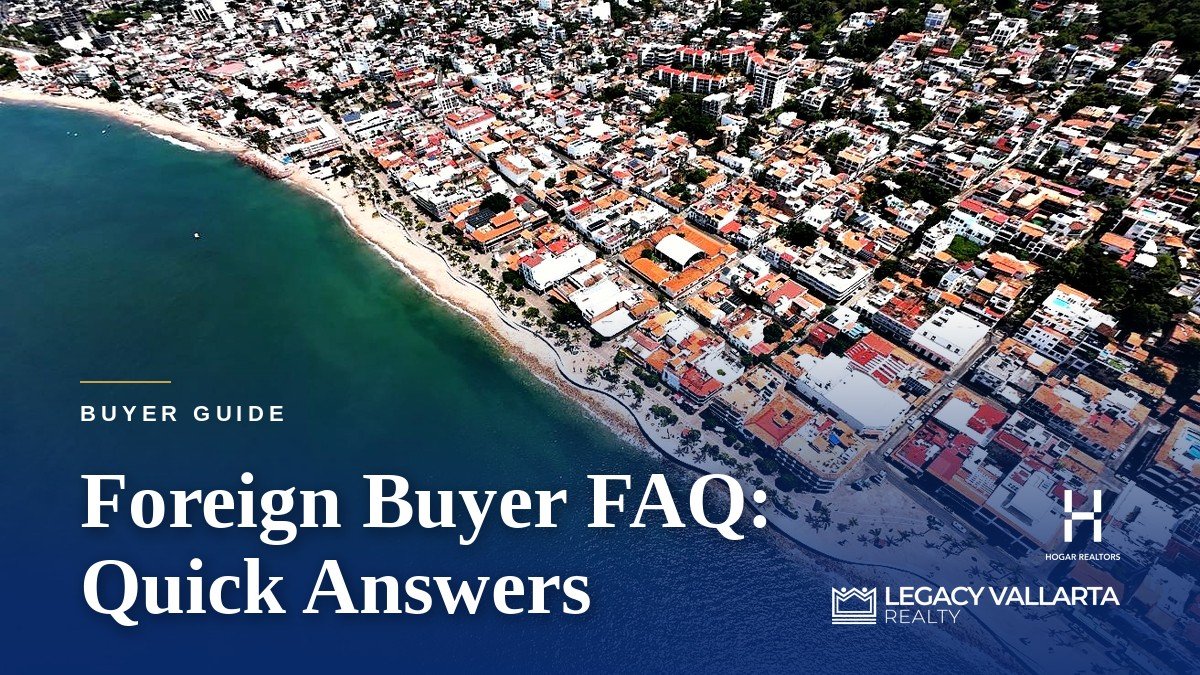
These are the questions foreign buyers ask me most often, with short answers and links to the full articles. Laws and bank policies change, so verify details with a licensed professional.
This article is general information for planning purposes and is not legal, tax, medical or financial advice. Rules and conditions change, so confirm details with the official sources and licensed professionals named below before you act.
Can foreigners own property in Mexico?
Yes, in general. In the restricted zone near the coast, foreign buyers usually hold title through a bank trust called a fideicomiso. A notario and an attorney can confirm what applies to your purchase. See how to choose a notario.
What is a fideicomiso, and how long does it last?
The restricted zone covers land within roughly 50 kilometers of the coast, which includes Puerto Vallarta. In that zone, a foreign buyer holds the property through a bank trust, called a fideicomiso. The bank is the legal titleholder and you are the beneficiary with full rights to use, rent, sell or leave the property to heirs. The trust term is 50 years and can be renewed. The setup and annual bank fees vary, so ask for them in writing. Our guide to the fideicomiso explained covers the steps.
Can I get a mortgage?
Financing for foreigners exists but is limited, and terms vary by lender. Many buyers pay cash or use financing from another source. Read our financing guide.
What do lenders usually ask for, and what do the rates look like?
Financing for foreigners is a narrow market and terms change often, so treat these as a snapshot of 2026 and confirm with each lender. Mexican peso mortgages have been quoted at roughly 9 to 14 percent, usually financing 50 to 70 percent of the price. Some cross-border lenders offer US-dollar loans to US citizens at around 9 to 10 percent, commonly with a 35 percent down payment and a minimum loan near 350,000 dollars. I have not found a verified option for Canadian buyers, so most plan to pay cash or use financing from home. Our financing guide goes into more detail.
How long does a purchase take?
It depends on the property and the parties, but the steps from offer to keys follow a fairly standard order. See the offer-to-keys timeline.
How much cash do I need on top of the price?
Plan for closing costs on the buyer’s side, which commonly fall between about 4 and 6 percent of the price. They include the notary, taxes and registration, the trust fees if a trust is required, and any appraisal or inspection. A good estimate from your notary at the offer stage is worth more than a rule of thumb. See buying costs for the line items.
What is escrow, and do I need it?
Escrow means a neutral third party holds the deposit until the conditions of the contract are met. It is common for international buyers and sellers who do not know each other. Fees have commonly run about 450 to 800 US dollars and are often paid by the buyer, but that is negotiable. Read escrow in Puerto Vallarta before you wire money.
How much is the deposit, and how long does closing take?
A deposit of about 10 percent when the offer is accepted is typical. A new trust can add roughly 45 to 90 days to the process, so a purchase involving a fideicomiso usually takes longer than one that does not need it. Your notary can give you a realistic calendar for the specific property.
Are there anti-money-laundering rules I should know?
Yes. A July 2025 reform tightened the rules for real estate. As I understand it, transactions above 8,000 UMAs, a reference unit worth 117.31 pesos in 2026 (about 938,000 pesos), carry additional identification and reporting requirements. This is not an obstacle for a legitimate buyer, but it is the reason notaries and banks ask for documents and proof of the source of funds. Ask your notary what they will need, and gather it early. Because the rules have changed recently, confirm the details with a licensed professional.
What ongoing costs should I expect?
Property tax, condo fees, utilities, insurance and maintenance. Learn what to ask in condo fees and home insurance.
Do I need an inspection?
Yes, it is worth doing. See pre-purchase inspection.
What should I ask before I make an offer?
- Who holds the title, and can the seller show it clean?
- Are the property taxes and HOA fees current, and is there a no-debt certificate?
- Does the building have an up-to-date reserve fund and a recent financial report?
- Is the property in the restricted zone, and if so, is there already a trust?
- What is included in the sale, such as furniture or parking, and who pays which closing costs?
- Do I want an inspection, and what contingencies does the contract allow?
These are the questions that save money later, and the answers to them are worth more than any of the headline numbers in this FAQ.
Where should I start?
Rent first if you can, and read the common first-time mistakes.
Related reading
Where to find more information
Title, trusts and legal steps: a Mexican attorney and a notario público. Banking and tax: your bank and a licensed tax professional in both countries. Residency: INM. Market context: AMPI Vallarta y Compostela.
Questions about buying or living in Puerto Vallarta? Book a call with me, message me on WhatsApp, or keep reading on the Legacy Vallarta Realty blog.
Legacy Vallarta Realty shares local market perspective for information only. Nothing here is a guarantee of future prices, rental income or timelines.


Join The Discussion