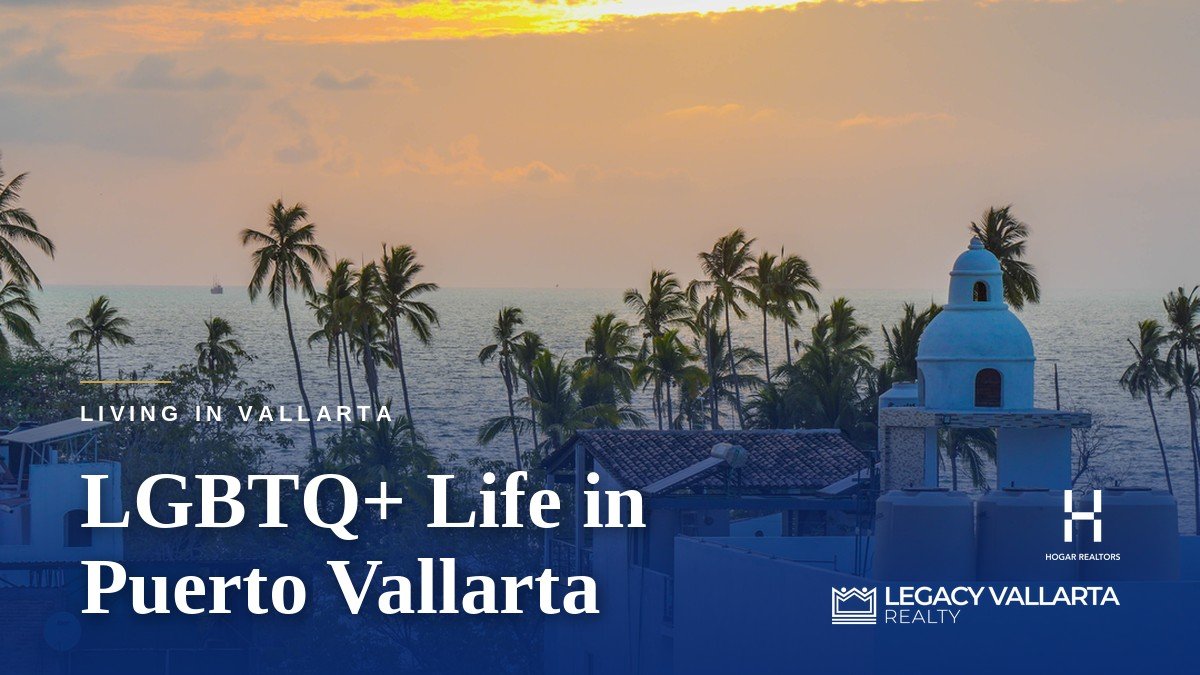
Puerto Vallarta has long been known as one of the most welcoming destinations in Mexico for LGBTQ+ residents and visitors. If you are thinking about making it home, here is a practical view of the neighborhoods and the questions worth asking.
Experiences differ from person to person, so use this as a starting point and visit before you decide.
This article is general information for planning purposes and is not legal, tax, medical or financial advice. Rules and conditions change, so confirm details with the official sources and licensed professionals named below before you act.
What “welcoming” means here, and what it does not
I have lived in Puerto Vallarta since December 2000, and the city’s reputation as a welcoming place for LGBTQ+ residents and visitors is one of the things people mention most when they ask me about moving here. It is a reputation built over decades by a visible community, a lot of businesses that cater to it, and a tourism economy that has long welcomed it.
It helps to be precise about what is a feature of the city and what is a feature of the law. On the legal side, Jalisco’s state Congress approved reforms on April 7, 2022 that allow same-sex marriage, recognize transgender identity and ban conversion therapies. According to local press at the time, those reforms followed a 2015 ruling of Mexico’s Supreme Court declaring state civil-code bans on same-sex marriage unconstitutional, and by late October 2022 same-sex marriage had been approved in all 32 states. The same coverage described Jalisco as a conservative state overall, which is a useful reminder: the atmosphere of Puerto Vallarta is a characteristic of the city and its neighborhoods, and it can feel different once you travel inland. That is not a reason to worry, just a reason to visit the specific place where you plan to live.
Zona Romántica and the Olas Altas area
Many LGBTQ+ residents are drawn to the Zona Romántica (Old Town south of the Cuale River), where restaurants, bars, shops and the beach are within walking distance. The trade-off is that central, lively areas come with noise and crowds, especially in high season. Read our noise guide and check the street at night.
Pride week and how it changes the neighborhood
Vallarta Pride is the clearest example of how the community shapes the calendar. In 2026, Pride Week ran from May 17 to 24, with the parade on Thursday, May 21 at 4 pm, according to the organizers’ published guide. The route started at the Sheraton Buganvilias on the malecón, went south past the Rotunda del Mar and the Arches, crossed the Río Cuale bridge, followed Ignacio L. Vallarta and ended at Lázaro Cárdenas Park in the Romantic Zone, followed by a free block party. Press coverage describes tens of thousands of locals and visitors attending.
For a resident, that means a few days when streets close, traffic changes and the Zona Romántica is very busy. Some owners love that energy, and some prefer to be elsewhere that week. If you are considering a home or a rental near the route, ask how the week affects access, noise and parking, and check each year’s dates, because they change. Treat the 2026 dates as an example, not a promise for next year.
Quieter alternatives
If you want more calm, look at neighborhoods a short ride away, from the hills above the center to the Hotel Zone and the marina areas. Our neighborhood overview compares them for lifestyle and for rental and resale potential.
Questions to ask when you compare neighborhoods
Because the Zona Romántica and nearby areas are the most popular starting point, a few practical questions help you decide whether they fit your daily life, and they apply equally to quieter areas.
- What is the street like at 11 pm and at 7 am? Visit on a weekend and on a weekday, in high season if you can.
- How far are the things you use every week? Groceries, a gym, a pharmacy, your doctor and the beach.
- What do the building rules say? Noise hours, pets, guests, short-term rentals and the HOA fees are in the condominium regulations, and you should read them before you make an offer.
- What does a typical month cost? Compare HOA fees, utilities and, if you rent, the real price after fees.
- Will you want a community right away? If so, spend a few weeks in the area before committing, which is the idea behind renting first.
Safety, community and daily life
Like any destination, Puerto Vallarta has areas and situations where common sense applies. Our article on safety covers what residents actually do. For community, people often start with local events, social groups, gyms and volunteer organizations.
Everyday habits that work for everyone
Safety information about Puerto Vallarta is easy to find and often exaggerated in both directions, so I prefer the boring habits that residents actually use. Community guides written for LGBTQ+ visitors suggest the same basics: use licensed taxis or established ride apps and check the plate and driver against the app, meet someone new for the first time in a public place rather than a hotel or home, keep an eye on your drink, and check the beach flag before you swim. If you use dating apps, share your plans with a friend. These are the same habits any careful traveler follows in a big city.
On health, private hospitals generally ask for a payment guarantee when you are admitted, so keep your insurance details handy and ask for an itemized receipt (a factura) for your claim. Our guide to how healthcare in Puerto Vallarta actually works explains what to expect.
Legal and practical planning
If you are planning to move with a partner, spouse or family, ask a qualified Mexican attorney and the relevant authorities how residency, marriage recognition and property ownership apply to your situation. See residency in Mexico for the general process.
If you are moving with a partner: the order I would follow
People who move as a couple often ask where to begin, so here is an order that keeps decisions reversible for as long as possible.
- Visit in the season you expect to live here, then rent for a month or longer in the neighborhood you like.
- Ask an attorney how residency applies to your situation, including whether you would apply individually or as a couple, and how your marriage is recognized.
- If you plan to buy, decide how you want to hold title before you make an offer. Ask the notary and your attorney how the trust (fideicomiso) names beneficiaries, and what happens to the property if one of you dies.
- Make a will for your assets in Mexico, and ask the professional you use how it works alongside any will you already have.
- Only then compare listings, with the building rules and the street at night in mind.
None of this is specific to one group of buyers, but couples who are not sure how their relationship is recognized in two countries benefit most from getting the paperwork right at the start. If you would like to talk through your situation, you can book a 30-minute call at meetings.hubspot.com/neft, message me on WhatsApp, or browse more guides on our blog.
Related reading
Where to find more information
Residency and civil status questions: Instituto Nacional de Migración (INM) and a Mexican attorney. Events and community: the Puerto Vallarta tourism board and local LGBTQ+ business and community groups. Local market perspective: AMPI Vallarta y Compostela.
Questions about buying or living in Puerto Vallarta? Book a call with me, message me on WhatsApp, or keep reading on the Legacy Vallarta Realty blog.
Legacy Vallarta Realty shares local market perspective for information only. Nothing here is a guarantee of future prices, rental income or timelines.

Join The Discussion